Houston's – Restaurant Redesign
Concept demonstration showcasing a modern, conversion-focused restaurant website redesign with mobile-first menus, clear reservations, and improved local SEO.
Project snapshot
From PDF menus to a modern, mobile-first restaurant experience
Concept demonstration showing how to transform a restaurant's digital presence from static PDF menus to a cinematic homepage, tap-friendly menu layouts, and clear reservation flows—making it easier for guests to discover, browse, and book from any device.
Overview
This concept demonstrates how SmalCoda approaches restaurant website redesigns. The demonstration addresses common challenges restaurants face: PDF menus that don't work on mobile, generic content that doesn't reflect the dining experience, and buried information that makes it hard for guests to plan visits. This project showcases a modern, mobile-first approach to restaurant websites.
Design Approach
The approach starts with content and menu auditing, mapping dishes, categories, and key information into a structured architecture. The homepage acts as a concise overview with hero imagery, primary CTAs, and clear paths into menus and reservations. Rather than oversized PDFs, menus are broken into logical sections with typography and spacing tuned for comfortable reading on all devices. The design uses a restrained palette, understated typography, and subtle motion.
UX & UI Design
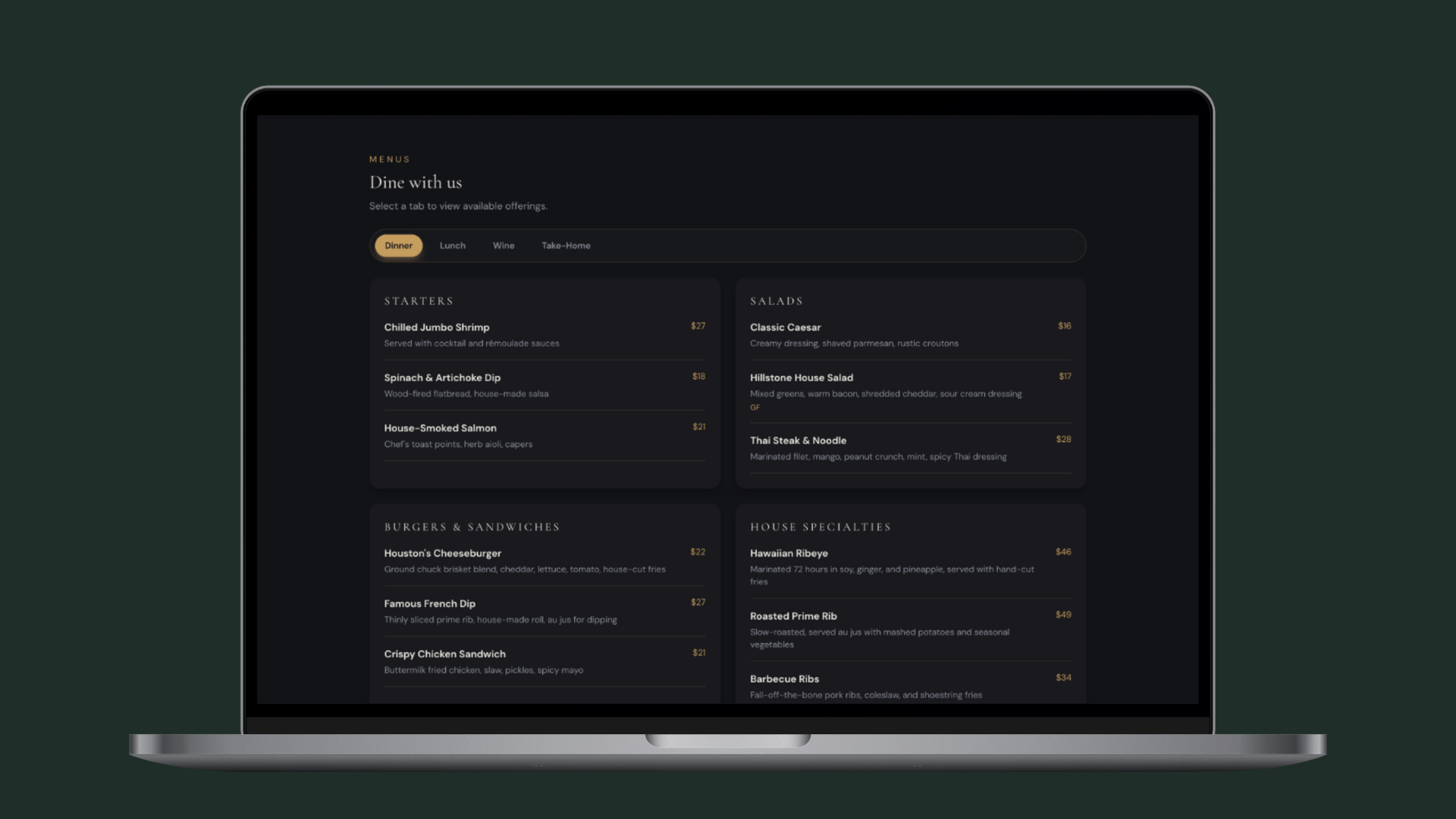
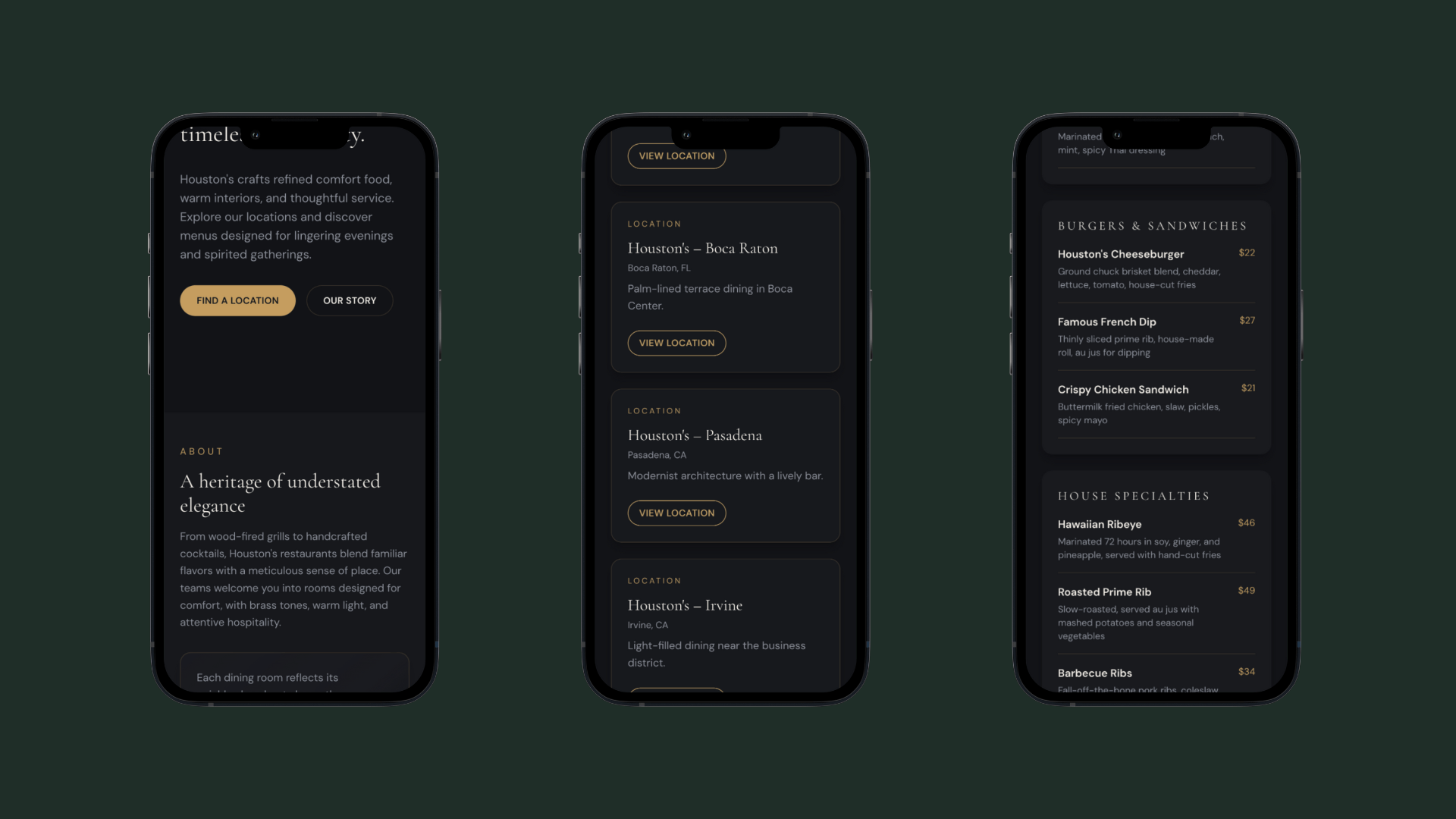
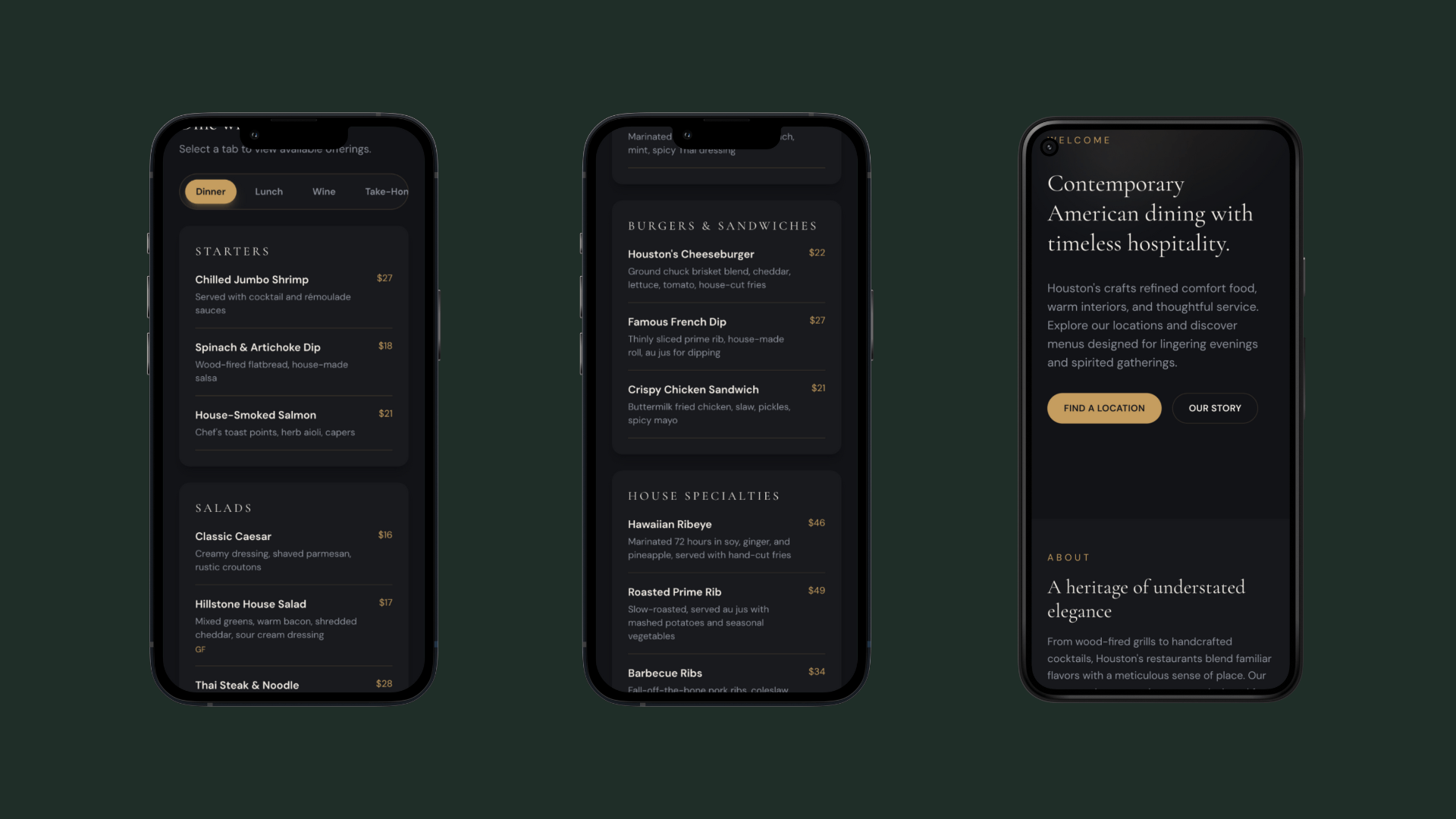
The interface focuses on key flows: browsing menus, checking hours and location, and booking visits. Sticky navigation keeps essential pages one tap away. Menu pages use section headers, price alignment, and short descriptions for scannability. On mobile, menus use generous line height and tap targets, eliminating the need for pinch-zoom. Callouts highlight signature dishes and limited-availability items.
Technical Implementation
Implemented with Next.js App Router and Tailwind CSS, menu data is stored as structured content for easy updates. Pages are statically generated for speed and SEO. Semantic HTML, accessible color contrast, and keyboard-friendly interactions ensure usability. Micro-interactions via Framer Motion add polish without overwhelming. Image optimization keeps performance in check.
Want this approach for your business?
This concept demonstrates how we think about design and technical implementation. Let's discuss how we can apply these strategies to your project.